Student culture
One of LTKY’s most important tasks is to act as a promoter of culture and community. For our part, we want to ensure that the culture of the different fields of study is reflected on our campuses and that traditions are respected. At the same time, however, we strive to develop and renew our traditions to suit the present day. It is important to us that, in accordance with Skinnarila’s spirit, everyone feels welcome and feels part of the community.
Student-English dictionary
Below are the most important words belonging to the Teekkari and Kylteri slang in Lappeenranta. With these skills, you can stay on the cart of what is being talked about.
Table of Contents
AALEF
A company owned by the Student Union. It runs a kiosk and two restaurants in Lappeenranta campus
AETHER
A former guild for all the international programs at the LUT Lahti campus, which dissolved into three guilds in the summer 2024. Aether students were identified by dark yellow overalls.
ALIVE
The online media of the Student Union, with colorful stories and articles about LUT students and life on campus
ARMATUURI
Energy technology guild in Lappeenranta, white overalls
BAND ROOM
A band room located in Lahti, on the ground floor of the Niemenkatu campus, which can be rented by students through the student union
CLUSTER
Software engineering guild in Lappeenranta, red overalls
DOMINUS
Social and communication sciences guild in Lappeenranta, with light blue overalls
EXCURSION
A trip made usually by bus, may include business visits and other nice activities
eLUT
An online student service that gathers study-related information, support services, and all other necessary information at the same site
ENKLAAVI
Business administration guild in Lappeenranta, neon yellow overalls
ESN Erasmus Student Network (ESN)
A non-profit student organization that represents international students. The goal is to strengthen intercultural understanding and as students help each other. ESN Lahti has lime green overalls and ESN Lappeenranta has blue overalls.
EVENT ARENA
A lobby space at Lahti campus, where you can hang out, hold events, play games and enjoy the café products.
FRESHER
Also called freshman, is a first year student.
FRESHER SLIP
Or fresher point card, is a paper on which freshers collect points in their first year by completing various tasks and participating in events.
FRESHER WEEKS
The university path for new students begins with an orientation week, followed by another eventful week. These two weeks are called fresher weeks.
FUUSIO
Energy technology guild in Lahti, with light purple overalls.
G
Officially Cafe Bar G, a student-friendly café / restaurant next to the Student Union building in Lappeenranta
GALLERY LOUNGE
At the Lappeenranta campus, next to the library, there is a lobby/reading/group work space that also has a grand piano
GALLERY NOSTE
Space between Street Cafe and TEK Lounge, where art exhibitions are held in Lappeenranta
GUILD
An independent association of students from a particular degree program that organizes events and advocacy for its members
GUILD PARENT
Guild contact person from the Student Union board.
GUILD ROOM
A place at the campus where you can relax with student friends. Each guild has its own guild room, and in Lahti there is one common guild room called the Slounge.
HALLOPED
HallOpEd is an administrative student representative, who oversees students’ interests in, for example, academic councils
HOPS
Or PSP is the personal study plan
HÄSSI
Student magazine from “lappeen Ranta” published by the organization Powi ry during April.
KAPITAL
Industrial Engineering and Management guild in Lahti, with blue and dark blue overalls.
KAPLAAKI
Production economy guild in Lappeenranta, dark blue overalls.
KETEK
Chemical engineering guild in Lappeenranta, black overalls.
KELLARI
A cellar located at the ground floor of the Student Union building in Lappeenranta. Students and guilds can organize events and enjoy the sauna there, the place can be rented through the Student Union websites
KIKE
Language center, a place to learn domestic and foreign languages
KRK
Mechanical engineering guild in Lappeenranta, orange overalls
KYLTERI
Senior business student. Freshmen become Kylteris during the baptism in Wappu
KYYKKÄ
Traditional karelian sport, which is highly played at the LUT community
LAHO
Lahti student associations, more commonly known as Laho, consists of all the student associations at the campus. Laho events are open for everyone.
LAMKOOMA
A campus cafe owned by the student union KOE located on the Lahti campus, where you can get products at student prices by showing your student card.
lappeen Ranta
Often, the student community likes to write “Lappeenranta” in a humorous way.
LATEKSII
Computational technology guild in Lappeenranta, fuchsia pink overalls
LTKY
Or “Lytky”,the Student Union of LUT University. Pursues the interests of all students in the university regardless of the color of the overalls. The student union office is located at the ground floor of the student union building (Lappeenranta) and on the ground floor of A-wing M19-campus (Lahti)
LUTIKKA
An access control key that allows access to the campus doors at any time in Lappeenranta
MONARI
A multi-purpose hall on the ground floor of the 3rd phase of the Lappeenranta campus
MOODLE
An online learning platform for teaching and learning. The Moodle learning environment is used in several LUT courses as part of the teaching
N-FRESHER
“N-freshmen will be called any LUT student who is known to be a sixth-year teekkari or kylteri”
ORIENTATION WEEK
Orientation week is an essential part of starting studies for new students. The orientation week is the week before the start of the semester. During the orientation week, course registrations are handled under supervision and studies for the beginning of the academic year are planned under the guidance of the supervisors and study advisors. Also known as freshman week
PELLETTI
Environmental technology guild in Lappeenranta, gray overalls
PRUJU
Lecture handout, which can be purchased from the Aalef Kiosk in LUT main building in Lappeenranta. Most of them are digital nowadays
REPCO
The representative council is the highest decision-making body of the Student Union, elected every two years
SAUNIS
A free sauna evening held on Tuesdays at the sauna space of LOAS PK5, which is Punkkerikatu 5, Lappeenranta.
SILLIS
A casual breakfast event after an annual ball. Usually with a theme (e.g. Army, 80’s, Zoo, etc…).
SISU
Student information system for registering for exams and courses, changing contact information and tracking your own performance information. In addition, Sisu makes a student’s personal study plan, or PSP
SITSIT/SITZ
An academic table party where you eat, drink and sing according to etiquette. Freshmen are introduced to etiquette during Freshman Sitz.
SKINNARILA SAUNA
LUT’s cottage with saunas on the shores of Lake Saimaa near the campus.
SKINNARILAN VAPAAVALTIO (SVV)
Areas around the Lappeenranta campus where everyone behaves in the spirit of Skinnarila.
SLOUNGE
Student Lounge, a common guild room in Lahti campus.
SOSA
Software engineering guild in Lahti, recognizable by the olive green overalls.
STUDENT HUB
A room of LTKY and KOE located in the city center of Lahti, where student organizations can organize small-scale events.
SUOMEN EKONOMIT
The Finnish Business School Graduates is a trade union for business students and graduates.
SÄTKY
Electrical engineering guild in Lappeenranta, green overalls.
TASSEL FRESHER
Tupsufuksi, a person who is wearing their Teekkari cap for the first year. Usually it’s a second year student.
TEK
Tekniikan Akateemiset or trade union of Academic engineers and architects in Finland.
TESSERACT
TES students’ guild in Lappeenranta, with brown overalls.
TUTOR
Your helper, mentor, advisor and friend throughout your studies
VIERULA
LOAS’s cottage with saunas on the shores of Lake Saimaa along Skinnarilankatu
VUJUT
Annual ball, the birthday of a guild or association, or a great academic celebration. It usually includes a gorgeous academic table party, or fancy sitz.
WAPPU
Nationally Vappu is May Day (1st of May) celebration. In the student community, Wappu is the culmination of the whole year, which is celebrated in Lappeenranta according to a longer formula than the rest of Finland. In 2024, Wappu was celebrated for 36 days and in Lahti for 22 days.
Sits party (Sitsit)
Sits are essentially an academic table party. In practice, the tradition was adopted from Sweden and is somewhat reminiscent of crab festivals, but has evolved over the years to be slightly different in each locality. Sits party includes singing, toasting drinks, dressing according to the theme, food and, of course, the afterparty.
Sits normally have a toastmaster or two. They will lead the event, determine breaks, and decide on the order of meals. The word of the Toast must be respected during the sits so that the celebrations can be carried out on schedule and without any problems.
Singing plays a big part in sits. Both the technology students (Teekkari) and the economy students (Kylteri) have their own singing traditions, but several songs are familiar to both. Teekkarisits are traditionally started with the crocodile Gena’s birthday song and kylterisits with Helan går. Teekkarisits also tend to end with the anthem of the Eternal Teekkari and the Karelian song. In almost every song, the students have also written their own verses, the singing of which is equally part of the Sits tradition. During the song, you may also play, get up in chairs, go under the table, or drum the table. Singing also doesn’t have to be limited to songbooks or PunaMusta’s chants, as composing and writing new songs is more than desirable.
The Sits program includes proggis, especially in kylterisits. In proggis, someone is asked on stage, where they present a program number, which can be a song, a competition, a dance, or whatever. In kylterisits it is common to distribute punishments, red-mentions, to misbehaving sitters.
Sits are normally followed by afterparty, where partying, singing and socializing can be continued in more relaxed manner.
Wappu
Lappeenranta is known in other parts of Finland for three things: meat pies filled with ham and egg, the hockey team of SaiPa and The Longest Wappu in Finland. In student circles, mostly for the last matter. Depending on the year and other factors, Wappu lasts on average from the beginning of April to the second day of May – in 2024 was the longest Wappu so far which was 36 days long.
During Wappu there are all sorts of events offered for the students. The frame of wappu consists of already established series of spectacles starting with the Wappu call and continuing with e.g. FinnHits party and the hill car race KRuisinKi and finishes with the culminating events of May Day Eve and May Day from teekkari baptism in Lake Saimaa to the May Day picnic. In addition, each year a number of innovative new events take place.
During Wappu student overalls are like a home to students of LUT and they are the dress code in most events of Wappu. In addition, they are the perfect alternative of clothing for the time in between the events. Together with the Wappu call the official overall badge of Wappu is published and it shines in the colors of the guild in charge of Wappu on that year.
The program and the most important information about Finland’s Longest Wappu are published on Wappu’s page.
In Lahti, wappu traditions are growing at a furious pace. In a few years, wappu has been extended from a week to more than three weeks, and the teekkari traditions become stronger every year. With new guilds, we will certainly see new traditions and events over the years. The wappu overall patch and wappu song that change every year also create a fresh atmosphere for the Lahti Wappu.
Cap and other symbols
The most important of the external characters of a student are overalls and the teekkari and student union cap. The LTKY office also has other symbols of our student community for sale: overall patches, ribbons for annual balls, pins and the PunaMusta songbook.
Teekkari cap and student union’s cap
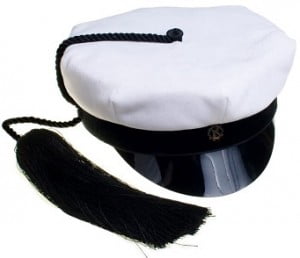
Teekkari cap is similar to the Finnish graduation cap which students can place on their head after graduating from upper secondary school. The Lappeenranta version of the teekkari cap is seven-cornered and red and black on the inside. The cap has a tassel that hangs over the right edge of the cap.
The student union’s cap, i.e. the cap of LUT business scientists and social science students, is made from a Finnish graduation cap by replacing the original cockade with our student union’s symbol. These cockades can be purchased from the LTKY office.
The period of use of the Teekkari and student union cap starts at 12:00 on Wappu Eve and ends in the fall at the cap lowering ceremony. The right to use the cap is regulated in LTKY’s Rule of Insignia.
Ordering Teekkari caps
Teekkari caps are ordered all together in two rounds, the first in October-November and the second in January-February. Orders are placed twice a year. We recommend placing the order in the first round of orders, because the cap is significantly cheaper when ordered in connection with it. For non-freshers, the cap price is the same regardless of the order round. The cap is ordered from LTKY’s online store and paid when ordering. The caps arrive at the student union a couple of weeks before May Day.
Overalls
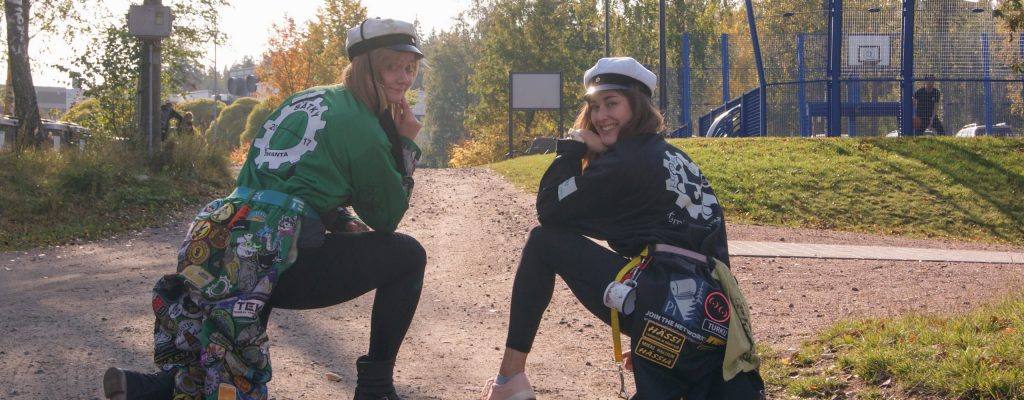
Overalls are protective clothing determined by the field of study and part of student culture. Overalls can and should be freely decorated with various patches and additions. Friends and dating couples also tend to exchange parts of overalls. Overalls can be worn freely throughout the year at your own discretion, and many events have overalls as the dress code.
Every guild has their own overall colour and you will surely get to know them quickly in the beginning of your studies.Our neighbor LAB’s students are also welcome to our events, and thus you will see other coloured overalls as well on the campus.
Annual ball
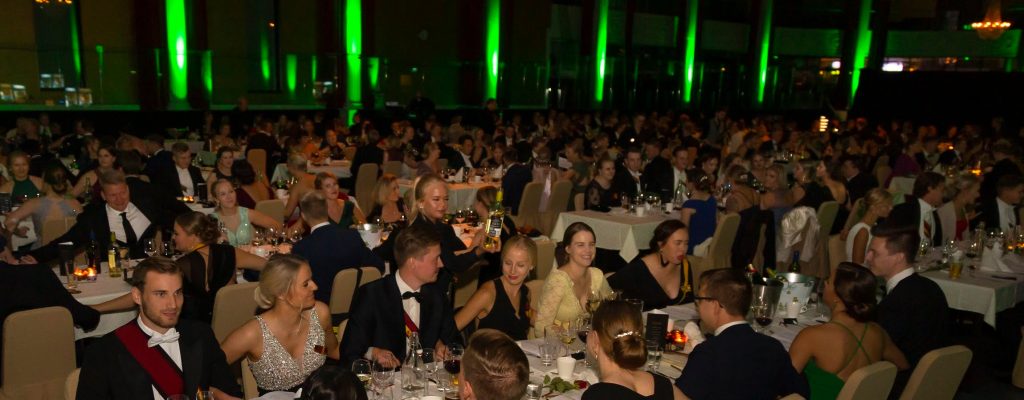
Annual balls are celebrated in honor of the birthdays of a guild, subject organization, association, or any group. Parties follow etiquette and tend to be very similar in structure. Mainly, however, at the annual celebrations, or vujut, people eat, drink, sing and dance nicely.
The celebration usually starts with a cocktail party (fin. kokkarit). Traditionally there have been invited guests presenting their greetings, thanks and some imaginative gift to the party organizers. Cocktail party usually has some small snacks and drinks for participants.
After the cocktail party, the main party itself can begin. The main party will feature a three-course dinner, familiar and unfamiliar songs will be sung, and program numbers will be followed. Depending on the organization celebrated, the program may include a keynote speech, rewarding commendable students or alumnus, a speech by the chair of the organizing body, a speech for a woman, or a free program ranging from a choral song performance to a drag show. The main party is usually concluded with dances accompanied by the band.
The party will, of course, move on to an after party. In the after party, it is possible to get more food and drink and a live band will normally play on site. The duration of the after party has not been determined and fewer quest actually remember, how long the after parties went on.
The next day of the annual ball is brunch or sillis. These differ from each other mainly on the basis of the dresscode, as the brunch dresscode is a hokinait (cocktail but more casual and fun) while the sillis has overalls and a theme. In the brunch and sillis participants eat and drink, and often they also go to sauna ja listen to music, live or from a streaming services. The organizing body may have organized something on the spot, too. From a brunch or sillis, there is usually still a chance to go to a new after party, where the annual celebrations will officially end at the latest.
Dress code
Student events use very different dress codes (dressing instructions) depending on the nature of the event. Often an invitation or poster for an event states a dress code, which can be one of the more traditional ones, such as smart casual or something else. This quick guide opens up a bit of what is meant by the most commonly used dress code in our student community.
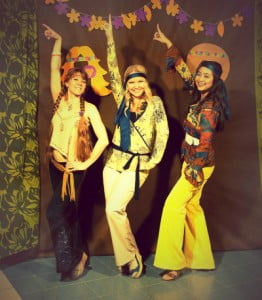
Often at events there is no dress code at all, so you can decide for yourself how to dress (although dressing itself is desirable). The event can also have a theme that is recommended to follow as much as you can, preferably from bottom to top. And it’s also fun to dress up! Normal clothes you can use any other day, so dressing up once in a while won’t hurt anyone.
Check out flea markets, second-hand stores and also your parents (or older students’) wardrobes for themed clothes!
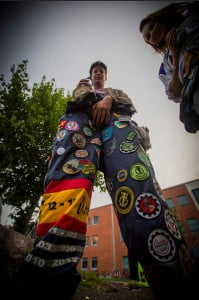
Overalls is probably the easiest and most used dress code. Just put your overalls on and let’s go! If you don’t yet own overalls, or their location is unknown for some reason, it’s always perfectly fine to arrive in normal clothing. But be careful: overalls is not a cloth you can put to any situation, and it should never replace some other dress code. If you don’t know, if overalls are appropriate, it’s recommended to arrive with normal clothes. Themed dress codes are also without overalls, unless mentioned separately (e.g. overalls + after ski).
After scaring you, it’s good to tell that after all, overalls are the most common dress code and there aren’t so many situations where you go wrong with them. Especially during wappu and freshmen weeks, the general dress code is overalls, except events where dress code is stated otherwise. Outdoor events are also typical places to use overalls, as they’re relaxed, warm and also no need to be afraid sitting on the grass. However, when you go to nutrition shops in the city centre, leave your overalls home unless it’s a designated overalls party.
There are numerous different versions of the dress guides for Smart Casual. However, there are two commonly used in Skinnarila: more festive and more mundane. Smart casual, hokinait and cocktail are basically the same, and they only vary in the formality and situation. Smart casual is for the more free-form connections.
The more mundane smart casual is usually worn for business contacts, i.e. either during a business visit, case evening or other similar. In this case, you’ll need a so-called business casual look, instead of a party dress. This usually means neat jeans, a collared shirt, and possibly a casual suit jacket or trouser pants with a more informal top, or a pencil skirt with a casual top or pants combined with a neat shirt and jacket.
For a more formal smart casual, you can also wear a jacket suit or a neat knee-length dress and jacket with it, or a neat casual suit (which can also be any color other than dark grey or black, and tie is not mandatory).

Hokinait is a commonly used, festive but casual dress model in Skinnarila that, despite its name, does not mean orange jackets or hockey outfits. Instead, it is a dress code between smart casual and cocktail. As this is a slightly more informal dress pattern, it allows for more variation, too.
Hokinait is mostly the same as smart casual, meaning neat jeans or a little black dress, which can also be a colored or skirt and a slightly more festive top. They can be combined with a casual jacket or, for example, a neat cardigan. Hokinait allows also different kind of suits, e.g. a violet velvet suit/costume. A suit or tie can also be worn for a more festive occasion.
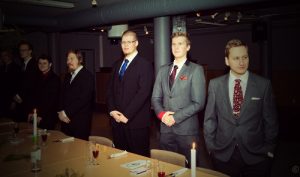
The nature of the event affects the dressing with cocktail dress code. Guideline is that in cocktail event you dress like you would go to your cousin’s wedding. The best option is a suit, or a knee high dress, and if needed, a jacket, bolero or a scarf to cover up shoulders. For more fancy occasion you can choose a colorful dress shirt or have fun with a tie.
The tailcoat can be worn at Skinnarila only on the most valuable occasion; at the academic anniversary celebrations (vuosijuhlat, vujut), when the suit can be accompanied by academic decorations and a municipal and/or guild ribbon, the purpose of which is to tell which party the student proudly represents at the celebration. LTKY’s municipal ribbon has the colors of Karelia; the edges are black and there is a red stripe in the middle. You can find more detailed instructions for using the municipal tape in Chapter IV of the Acknowledgement regulation. A common guideline is that you should NOT attach anything to the municipal ribbon that does not belong to it, such as your own municipality or guild’s pin, even if they fit well on the ribbon.
Tailcoat dress code includes (surprisingly) a tailcoat, with its own loopless pants with a satin ribbon on the side, a tail coat, a white tailcoat, a white vest and a white bow, as well as cufflinks and laurel shoes. There is no belt with a tailcoat, so you should wear suspenders if you are afraid your pants will drop. You can use a pocket watch with a tailcoat if you wish.
Instead of a tailcoat, you can wear a long evening dress that covers your ankles and according to the label, is not a trouser suit. The dress can be open, but then you should have a festive bolero, stole, or scarf to cover your shoulders. A festive fabric is often chosen, jewelry can be spectacular and a small evening bag is used.
The tailcoat can also be replaced with a dark suit if desired. The suit must then be black or almost black, the shirt white and the tie low-key. At Skinnarila, at the annual celebrations, it’s also common to see a tie that matches the color of their avec’s dress or suit, but the ties should not be patterned. For example, a dark blue or pearl gray tie is always a sure option.
Student prank
Student prank, aka “Jäynä”, is an essential part of Karelian student culture, and it is up to every student in our community to cherish the tradition. Pranking is not difficult, and even with small resources, it can be successful and bring joy. You should be proud of a successful prank, because it is our community’s student culture at its best!
The essence of a real student prank is often a mischievous but benevolent event, a device, an insight or a performance that sometimes moves at the extreme limits of appropriateness. The purpose of the prank is to create fun for the creator, the target, and the general public as well.
Student prank has always been the cornerstone of student culture in all student communities, fostering the collective spirit of the students. It has also shaped the public’s perception of the Teekkari culture as in good and not-so-good. The student prank thus acts as a messenger of the Teekkari culture hence it is important that student prank does no harm to anyone.
What is cool and what’s not is defined in the rules of Lappeenranta’s Jäynäkisa (the prank competition) which each prankster must read before starting pranking.